

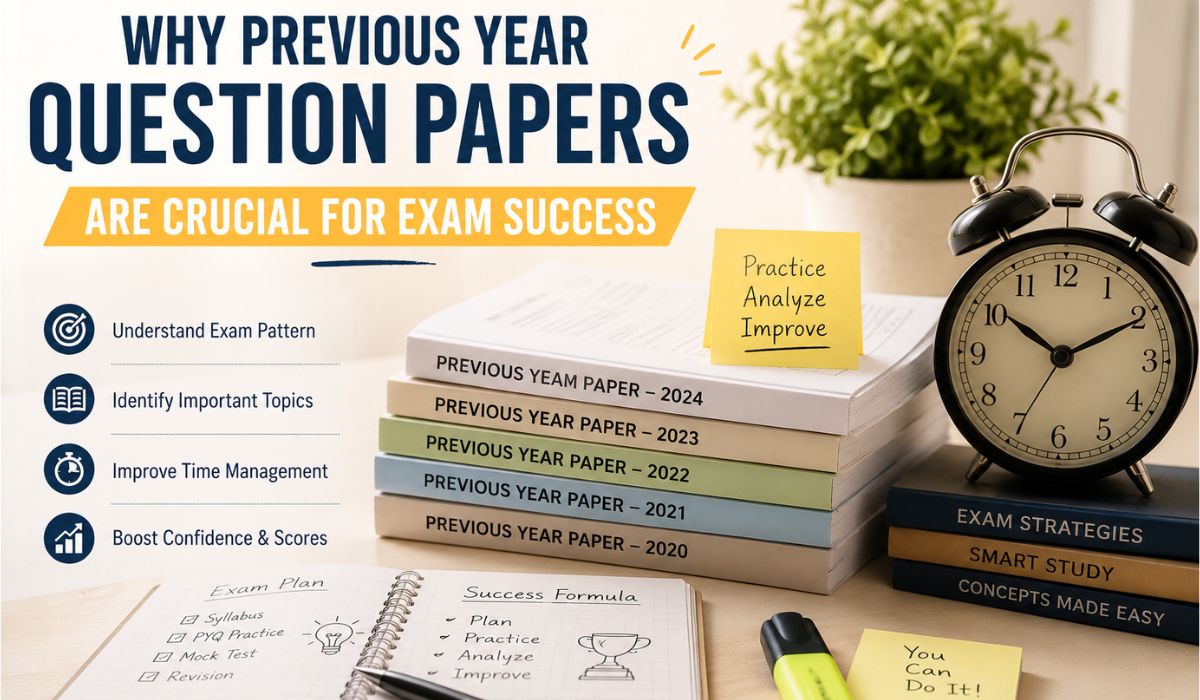
Preparing for university exams can be overwhelming. Among all study techniques, solving previous year question papers (PYQs) stands out as one of the most effective strategies. PYQs are essentially blueprints of the actual exam – they reveal the structure, difficulty level, and common topics that instructors focus on. Exam experts emphasize that preparation is incomplete without PYQs. In fact, using PYQs gives “insider” knowledge of the exam pattern, helping you approach the real test with confidence and clarity.
By diligently working through past papers, students can:
- Understand Exam Pattern: PYQs show the exact format of the exam – how many sections there are, types of questions (e.g. MCQs, short answers, essays), and mark distribution. This lets you practice under the same conditions you’ll face on test day. For example, a Manipal University Jaipur end-semester paper might have a mix of 10 MCQs, several short-answer questions, and a few long-answer questions. Knowing this ahead of time removes surprises.
- Identify Key Topics & Weightage: Instructors often repeat concepts over the years. By analyzing several years of papers, you can spot frequently asked subjects and chapters. Focusing your revision on these high-yield areas ensures you cover what truly matters. As one exam guide notes, PYQs reveal which topics carry more weight, enabling targeted study instead of blind cramming.
- Gauge Difficulty & Trends: Past papers give a realistic preview of question difficulty. Some years may have tougher problems or different emphasis; seeing multiple years helps you adjust your preparation accordingly. Trend analysis even shows that 60–70% of questions often come from repeated topics across years. In other words, mastering recurring topics through PYQs can cover the majority of the exam content.
- Master Time Management: Practicing PYQs under timed conditions is essential. It trains you to pace yourself through each section within the allocated time. Over time, you’ll learn how much time to spend on easy questions and how to tackle harder ones. For example, JEE aspirants find that PYQs help improve speed and decision-making under exam pressure. In university exams, this means you’re less likely to run out of time in the last minutes.
- Familiarize with Question Style: Every university and professor has a unique way of phrasing questions and setting problems. PYQs expose you to this language and style. When you see similar wording or formatting on exam day, it no longer feels foreign. This familiarity “breeds comfort” – reducing anxiety because nothing about the exam is completely new.
- Build Confidence & Reduce Anxiety: Entering an exam hall is stressful. However, having solved similar questions before makes the experience much more predictable. Past papers have a calming effect: studies show that encountering questions you’ve practiced before triggers confidence, not panic. By exam day, you’ll feel more prepared and in control, knowing that you’ve already tackled comparable problems.
- Self-Assessment & Targeted Revision: Finally, PYQs are a powerful self-evaluation tool. After you attempt a paper, check your answers against model solutions or marking schemes. This helps you pinpoint strengths and weaknesses. You’ll see which concepts you have mastered and which need more work. Then you can focus your remaining study time on improving those weak spots. As one exam coach notes, solving past papers lets you “evaluate your own performance and work on your shortcomings”.
- Along with solving previous year question papers, completing MUJ Assignments regularly helps students strengthen conceptual understanding and prepares them for both internal assessments and final examinations.
In summary, previous year question papers are an indispensable part of exam preparation. They make your study plan smarter by providing a clear picture of the exam you will face, rather than guessing from textbooks alone.
How to Use Previous Year Papers Effectively
Having a stack of old exam papers isn’t enough – how you use them matters most. Follow a strategic approach to get the maximum benefit:
- Familiarize First (Open-Book Review): Start by going through a recent past paper without worrying about time. Read each question carefully and refer to your notes or textbooks if needed. This open-book approach helps you understand the scope of questions and identifies which topics they cover. It’s like taking a guided tour of the exam.
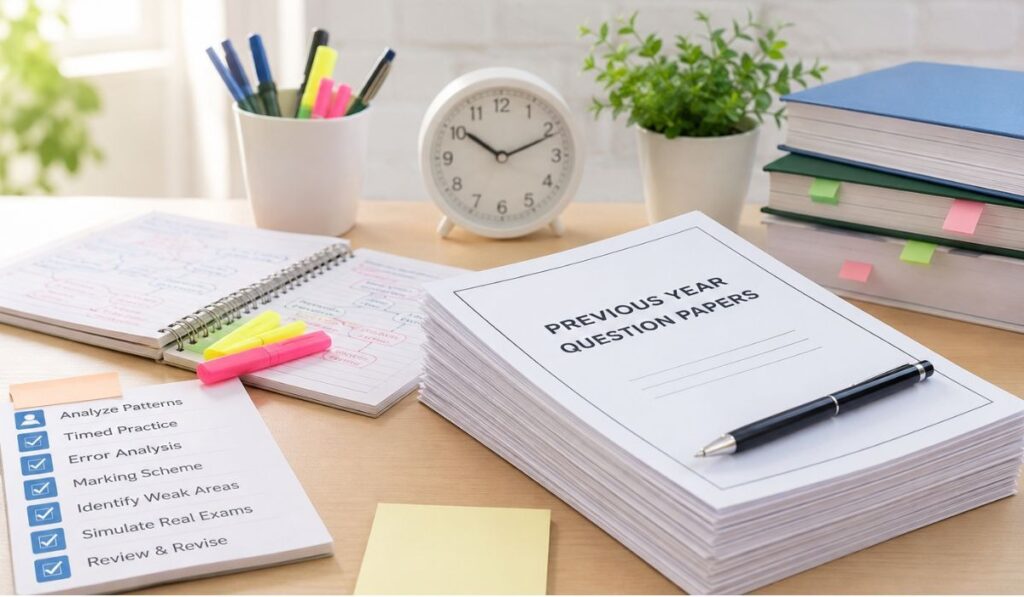
- Analyze Patterns by Topic: Once you know the overall structure, break down the questions by topic or chapter. For example, list how many questions came from each subject (e.g. “5 questions on Data Structures, 4 on Operating Systems”). This will reveal high-frequency areas. Prioritize studying the topics that appear most often in past papers.
- Timed Practice Sessions: After initial familiarization, start solving papers in exam-like conditions. Set a timer exactly as in the exam (e.g. 3 hours) and do the paper without any materials. This builds stamina and helps you practice time management. Treat these sessions like mock exams: try to eliminate distractions, and aim for the same rigor as the real test.
- Detailed Evaluation & Error Analysis: Don’t just mark answers as right or wrong – analyze your mistakes. For every error or question you get wrong, review the underlying concept. Write down why you got it wrong (misunderstanding concept, silly mistake, time pressure, etc.). This self-review process is crucial. It ensures you learn from the paper instead of repeating the same mistakes.
- Reviewing MUJ Solved Papers after attempting previous year papers allows students to compare their answers, understand the expected writing style, and improve their overall exam performance.
- Pay Attention to Marking Scheme: If available, study the answer key or marking scheme for each question. Notice how marks are allotted (e.g. keywords needed, diagrams, length of answer). Understanding how examiners award points helps you craft better answers. For instance, many answers may have key terms or diagram requirements – make sure to include those in your practice answers.
- Identify Weak Areas: Consistent errors in a topic show where you need extra work. If you keep missing questions on, say, Probability or International Economics, spend extra revision time on those chapters. You might revisit lectures, solve additional problems, or discuss with classmates/teachers until you feel more confident.
- Besides written examinations, students should also focus on preparing a high-quality MUJ Project Report, as project evaluations contribute significantly to overall academic success.
- Simulate Real Exams: As the actual exam nears, simulate a full exam experience. Find a quiet room, set a clock, and solve an entire paper (or a series of papers) back-to-back. This not only tests your knowledge but also builds mental stamina. By doing this, the real exam environment becomes familiar – you’ll know how it feels to sit for hours solving real questions.
- Review & Revise Key Solutions: In the last few days, use PYQs for quick revision. Focus on the toughest questions you got wrong earlier. For example, if a particular derivation or proof gave you trouble, redo it one more time. Reinforcing these challenging points helps ensure you’re ready for anything similar on exam day.
By following this methodical approach – open-book review, timed practice, and thorough review – you turn passive question papers into an active learning tool.
Tips for Maximizing PYQ Practice
- Mix with Mock Tests and Sample Papers: While PYQs are unmatched in authenticity, also use sample papers and mock tests to broaden your practice. Mock tests often combine multiple sources, giving you exposure to a wider variety of questions. However, always cross-check these with real past papers – PYQs remain the gold standard.
- Maintain a Mistake Log: Keep a notebook of all the mistakes you make on PYQs. Each time you solve a paper, jot down any concepts or question types you got wrong. Periodically review this log so you won’t repeat errors on the actual exam.
- Study in Groups (Carefully): Sometimes, discussing tough PYQ problems with classmates can clarify doubts. If you form a study group, consider assigning different questions to each person to solve first, then explain to others. This ensures active learning. (Just be sure the discussion remains focused on understanding, not copying answers.)
- Use PYQs for Answer Writing Practice: Particularly for essay or long-answer sections, use PYQs to practice writing full answers as if in an exam. Focus on structure: start with a clear introduction, use headings/bullets for clarity, include diagrams if needed, and conclude concisely. Over time, your answers will become more organized and targeted for the marking scheme.
- Avoid Common Mistakes: Don’t just solve each PYQ once and move on. Re-solve papers after a few weeks to test retention. Also avoid treating them as mere practice questions – always review errors. Research shows many students miss the benefit of PYQs by ignoring solutions or not analyzing mistakes.
Overall, smart practice with PYQs yields the best results. As one exam coach puts it: treat PYQs as essential learning tools, not just busy work.
Frequently Asked Questions
- Why are previous year question papers important?
PYQs are essentially revealing the exam’s blueprint. They show you exactly what to expect: exam format, question types, and how marks are distributed. They also highlight frequently tested topics. Using PYQs in preparation has been called “non-negotiable” for success – without them, you lack critical insight into what the examiners emphasize. - How many previous year papers should I solve?
There’s no strict number, but generally solving the last 5–10 years of papers gives very good coverage. Educational experts often recommend at least 7–10 years for comprehensive exams. The key is quality over quantity: it’s better to thoroughly review and learn from a few papers than to skim many. Focus on understanding every solution, not just checking the answers. - Do universities repeat questions from previous years?
Often, they do – at least in concept if not word-for-word. In fact, analysis of competitive exams shows that 60–70% of questions frequently come from topics that have appeared before. This means many questions (or very similar ones) are recurring. Regular practice of PYQs helps you recognize these patterns, so you can anticipate and master them. - Are previous year papers enough to pass exams?
PYQs are extremely helpful, but they should supplement, not replace, your other study. They train you on exam-style questions, but you still need a solid grasp of core concepts from textbooks and lectures. In other words, use PYQs alongside your regular study material. After studying a topic, test yourself with PYQs on that topic. This combination ensures you both understand the content and can apply it under exam conditions. - When should I start solving previous year papers?
Start early in your preparation. Once you have completed an initial study of a topic or unit, immediately begin practicing related PYQs on that topic. This reinforces learning right away. As exams approach, shift to solving full papers under timed conditions. Don’t wait until the last week – distributed practice over the semester yields the best results. - How do previous year papers improve performance?
By repeatedly exposing you to real exam questions, PYQs improve speed, accuracy, and confidence. They train you in exam discipline – for instance, deciding which questions to attempt first and how long to spend on each. They also help you write better answers by showing exactly what examiners look for. Overall, students who master PYQs enter the exam room more prepared, calmer, and ready to score higher than those who rely on study notes alone.
Conclusion
Previous year question papers are one of the most valuable resources for achieving better exam results. They provide a clear understanding of the exam pattern, highlight frequently tested topics, improve time management, and help you build the confidence needed to perform well under pressure. Instead of relying solely on textbooks and notes, combining your regular studies with consistent PYQ practice creates a smarter and more effective preparation strategy.
The key is not just to solve past papers but to analyze your mistakes, identify weak areas, and continuously improve your performance. Whether you’re preparing for university semester exams, competitive tests, or professional certifications, practicing previous year question papers can significantly increase your chances of scoring higher. Start solving them early, stay consistent, and make PYQs an essential part of your study routine to approach every exam with confidence and maximize your success.
If you’re looking for reliable Manipal University Jaipur Exam Paper Help, make sure to use authentic study resources, solved papers, and expert guidance to maximize your exam preparation.